
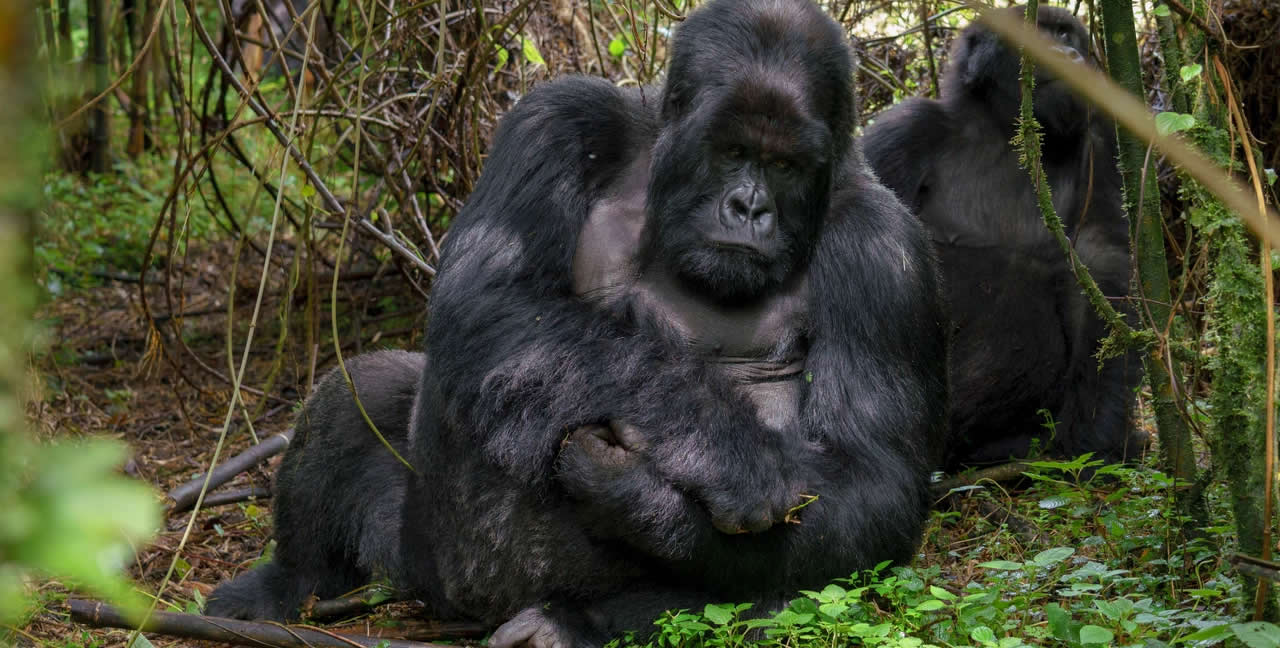
The dynamics of gorilla troops splitting to create new gorilla groups typically involve a younger silverback gorilla breaking away from the mother gorilla group with willing individual adult gorillas and their young ones separating to form their own new group normally named after that silverback.
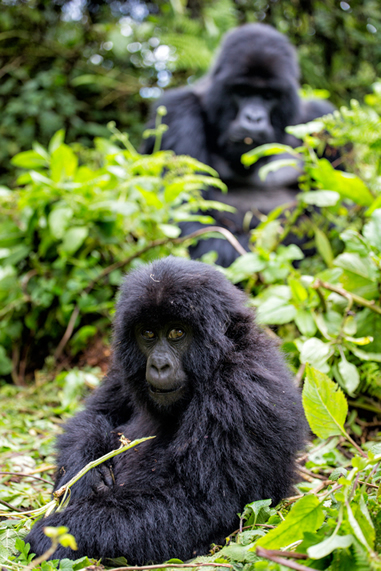
Gorilla groups are also known as gorilla troops or families with an average size of five individuals to forty gorillas with 10 being the average number of the group. Gorilla families are normally interrelated by birth or migration history headed by a single adult silverback gorilla who heads and over sees all activities of his gorilla troop including the location where the group feeds, sets up overnight nests, group safety and identifying threats, resolves troop conflicts, grooms younger gorillas among others. Gorilla groups splitting to form new families is a behavior which often happens and changes history of gorilla conservation each time a new gorilla troop is created.
Troops break-up is an interesting subject to explore and learn why gorilla groups slip to form new troops.
Increase in Gorilla troop size
A large gorilla family becomes very hard for a single dominant silverback gorilla to oversee all troop members and activities. When the numbers go beyond 20 gorillas and above in a single group, younger silverbacks in the group split leaving with several females and their young ones.
- The Humura gorilla troop split from Igisha gorilla family – which comprised of 40 mountain gorillas in Rwanda’s Volcanoes national park.
- Pablo troop headed by Cantsbee silverback gorilla had 65 mountain gorillas being recorded as one of the largest gorilla family split to form groups like Isabukuru, Musilikale, Mafunzo, Gushimira
- Susa gorilla family expanded from 7 mountain gorillas to 42 individuals making the troop one of the largest in Volcanoes national park. A number of gorilla families have been created from Susa family including Isimbi with17 individuals, Susa 19, Igisha, Humura, Karisimbi
Troop Leadership – multi male dominance
If the dominant silverback cannot strongly oversee all the troop activities in a family where there is a number of subordinate adult male gorillas, they may take advantage and entice female gorillas and younger ones to separate away from the main group to form their own gorilla family.
Death of the dominant silverback
In a group with many mature male gorillas, if death of the head silverback happens when the hierarchy of a new successor is not made, male gorillas may compete for headship of the family forcing the group to breakup forming new groups.
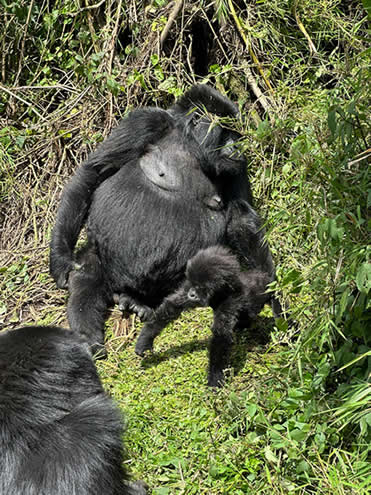
In the event that the group only had 1 silverback gorillas and he dies, the females and their young ones may completely abandon the gorilla family and get dissolved onto other groups.
Sexual maturity
Male gorillas reach full maturity to father young ones at the age of 15 to 20 years. About this time, a male gorilla is also starting to turn silver. Males start leaving their troop to live alone as they attract females from their natal family or other families. Within their natal group, competition for adult female gorillas among males is high and often ends in fighting within the group causing tension in the troop.
The dominant silverback has exclusive rights to breeding with all female gorillas in his troop which limits the chances of other male gorillas in the same troop. The separation process starts as juvenile males keep distancing away from parental care and eventually breakaway to form their own independent troops.
To avoid inbreeding
With the head silverback gorilla having rights to breed all adult female gorillas in his troop, inbreeding stands-out as a major threat. Most gorillas in a single gorilla family are related by blood and a few who joined the group from other families.
Is Gorilla group splitting good or bad?
Gorilla troops separating to form new groups is a good part of their social formation giving rise to genetic varieties of gorillas with stronger breeds of gorilla species which can withstand the changing dynamics.
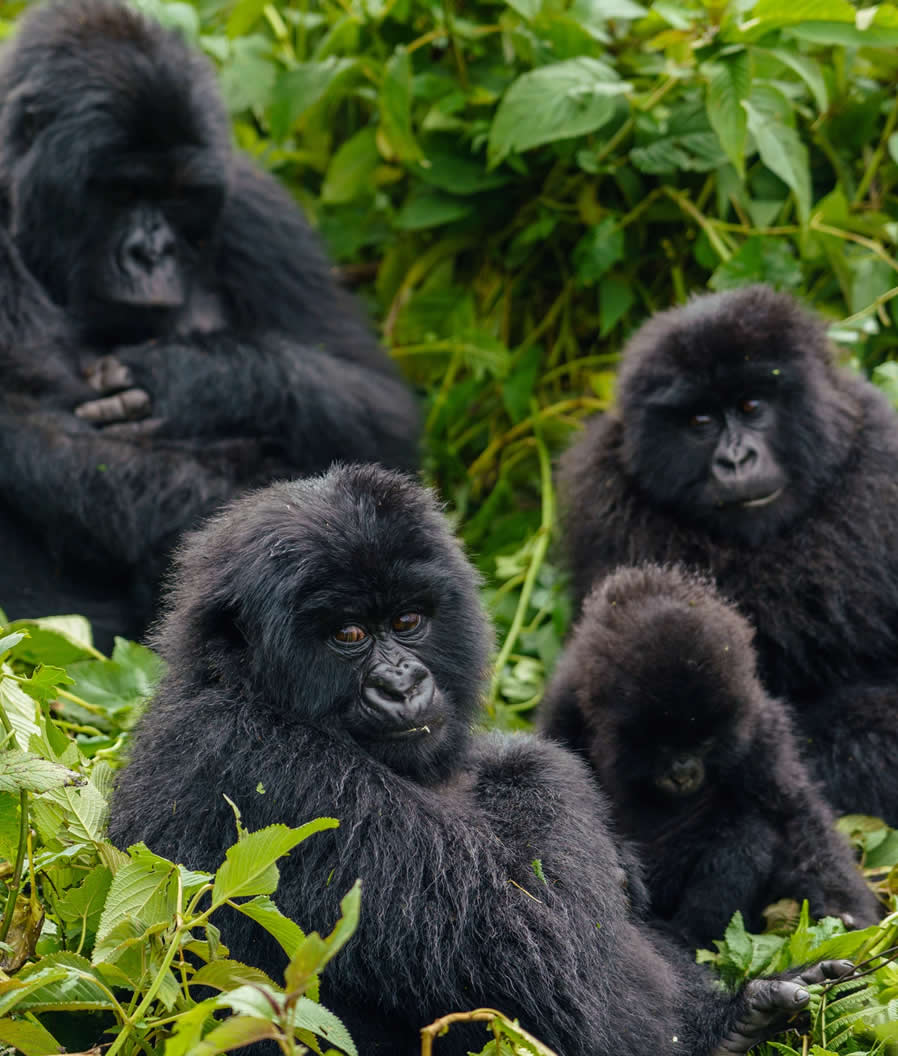
Each gorilla troop split is a separate part of the forest occupied! Once gorilla groups split, they migrate from the location of their natal family to a new location where the group can settle and expand. The Virunga volcanoes range where mountain gorillas thrive is very large and has enough room to keep all gorilla families formed.
The Negative impact of groups
splitting is the violence that can arise between unwilling silverback and the one trying to breakaway leading to fighting and injuring the gorillas.
Territory overlap is another observed problem when a newly formed troop settles within the home area of another gorilla family causing fighting.
In conclusion, for conservation experts, a new gorilla group is celebrated and highly followed with interest to learn about how they adopt to their new way of living. The more gorilla groups they are, the more chances of tourists booing enough gorilla permits per day to visit mountain gorillas in the wild.

Leave A Comment